Shopping Characters: Creative & Practical
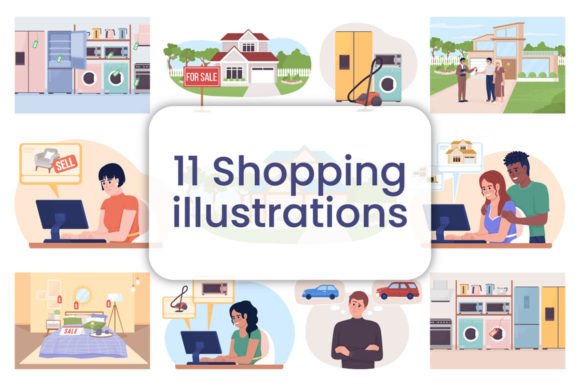
Shopping Characters is a versatile flat color vector illustration set featuring simple 2D cartoon characters engaged in everyday shopping activities. From buying houses to purchasing cars, these characters are designed for clarity, flexibility, and creative expression. Their clean lines and minimal details make them ideal for a wide range of projects, from digital marketing materials to educational content.
What makes Shopping Characters unique is its combination of simplicity and functionality. Each character is fully editable, allowing users to customize colors, poses, and backgrounds to fit specific needs. The set includes a household store as a background, offering a cohesive visual theme that can be adapted to various scenarios. Whether you're creating a presentation, a social media post, or a print design, these illustrations provide a professional yet approachable aesthetic.
Exploring Creative Possibilities
The versatility of Shopping Characters opens up a world of creative possibilities. For designers, these illustrations can serve as a starting point for storyboards, infographics, or branding elements. Marketers can use them to create engaging ad campaigns that highlight consumer behavior or product features. Educators might incorporate them into lesson plans or interactive learning tools to illustrate real-world scenarios.
One practical application is in e-commerce. By using characters that represent different customer personas, businesses can visualize the shopping journey from research to purchase. This helps in designing user-friendly interfaces, crafting compelling product descriptions, or developing targeted advertising strategies. The flat color style ensures consistency across platforms, making it easier to maintain a unified brand identity.
For bloggers and content creators, Shopping Characters offer a way to add visual interest to articles or videos without the need for complex graphic design skills. They can be used to break up text, illustrate key points, or create engaging social media posts. The ability to edit the characters means that they can be tailored to match the tone and style of any content, enhancing both readability and engagement.
Adapting for Different Goals and Audiences
Shopping Characters can be adapted to suit a variety of goals and audiences. For instance, small business owners might use them to create promotional materials that resonate with their target market. A local real estate agency could use the house-buying characters to illustrate property listings, while an automotive dealership might feature the car-purchasing characters in their advertisements.
Entrepreneurs and freelancers can leverage these illustrations to enhance their portfolios or client presentations. By incorporating Shopping Characters into case studies or project summaries, they can visually demonstrate how their work addresses specific challenges or meets client needs. This not only makes the content more engaging but also highlights the value of their services.
Educators and trainers can use the set to create interactive learning experiences. For example, a finance class might use the characters to teach budgeting concepts, while a marketing course could explore consumer behavior through visual storytelling. The simplicity of the illustrations allows students to focus on the core message without being distracted by complex visuals.
Practical Tips for Effective Use
To get the most out of Shopping Characters, it's important to plan your design strategy carefully. Start by identifying the purpose of your project and the audience you're targeting. This will help you choose the right characters, colors, and backgrounds to create a cohesive and effective visual narrative.
When working with flat color illustrations, consistency is key. Stick to a limited color palette and ensure that all elements align with your overall design theme. This not only improves the visual appeal but also reinforces brand recognition and professionalism.
Another tip is to experiment with different layouts and compositions. Try placing characters in various positions or combining them with other design elements like icons, charts, or text. This can help you discover new ways to convey your message and keep your content fresh and engaging.
Realistic Examples and Recommendations
Consider a scenario where a lifestyle blog wants to create a guide on home ownership. By using the house-buying characters, the blog can visually break down the process into manageable steps, making the information more digestible for readers. Adding a simple background of a household store can reinforce the theme and provide context for each stage of the journey.
For a tech startup looking to promote a new app, Shopping Characters could be used in a series of social media posts that show users interacting with the platform. The characters can be customized to reflect different user roles, such as a buyer, a seller, or a customer support agent, helping to illustrate the app's features and benefits in a relatable way.
When selecting a font, Bebas Neue offers a clean, modern look that complements the flat color style. It adds a touch of sophistication without overwhelming the illustrations. Ensure that the text is legible and properly spaced, so it enhances rather than distracts from the visual elements.
Finally, always test your designs across different platforms and devices. This ensures that the illustrations remain clear and effective, whether they're viewed on a smartphone, tablet, or desktop computer. By keeping your audience in mind and focusing on clarity and usability, you can maximize the impact of Shopping Characters in your projects.