Maximizing Patient Engagement with a Health Care Social Media Post
In the rapidly evolving digital landscape, healthcare providers face the unique challenge of communicating complex medical information in a way that is accessible, trustworthy, and engaging. The Health Care Social Media Post has emerged as a vital tool in this endeavor, serving as a bridge between clinical expertise and public understanding. Whether you are a hospital administrator, a private practice owner, or a health content creator, the ability to craft compelling visual narratives is no longer optional; it is essential for building community trust and promoting wellness.
At its core, a well-designed social media asset for healthcare does more than just fill a feed. It educates patients, dispels myths, announces services, and humanizes the medical profession. However, creating these assets from scratch can be time-consuming and technically demanding. This is where customizable design templates become invaluable resources for professionals who need to maintain a consistent brand voice without dedicating hours to graphic design software.
The Strategic Value of Visual Communication in Medicine
Visual content processes faster in the human brain than text alone. In a sector where attention spans are short and information overload is common, a Health Care Social Media Post must capture attention immediately while conveying authority. The primary purpose of these designs is to translate medical jargon into digestible insights. For instance, a post about flu prevention is far more effective when accompanied by clear icons and soothing colors than when presented as a block of text.
Furthermore, consistency in visual identity fosters recognition. When patients see a familiar color palette, font style, and layout structure across Instagram, Facebook, and LinkedIn, they subconsciously associate those visuals with reliability. This psychological connection is crucial in healthcare, where trust is the currency of the patient-provider relationship. A professional template ensures that every post, whether it's a holiday greeting or a serious public health announcement, adheres to high design standards.
Key Features of Effective Design Templates
When evaluating resources for creating your content, such as an Illustrator EPS file or a JPG preview, several technical and aesthetic features determine their utility. A high-quality template typically offers:
- Full Editability: The ability to modify text, colors, and shapes is paramount. Healthcare branding varies wildly; a pediatric clinic needs a different vibe than an oncology center. An editable EPS file allows designers to swap out elements to match specific brand guidelines.
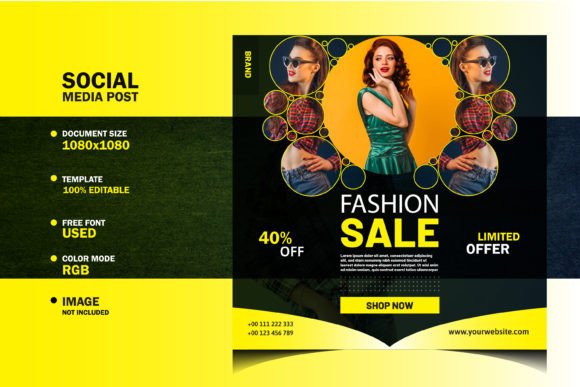
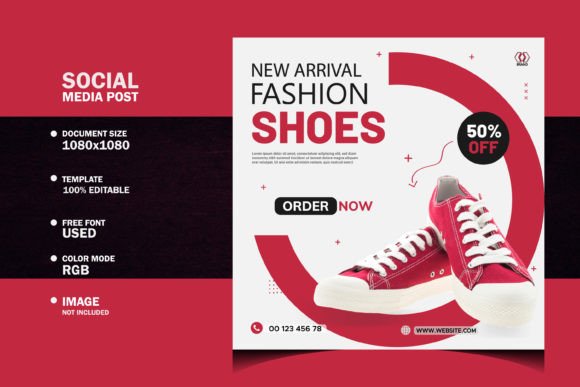
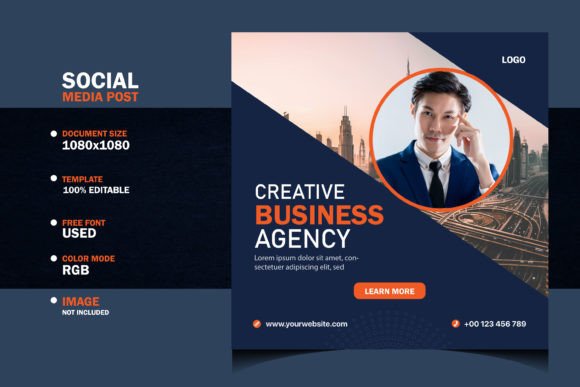
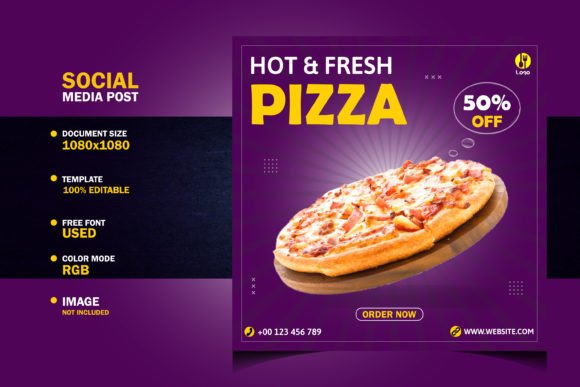
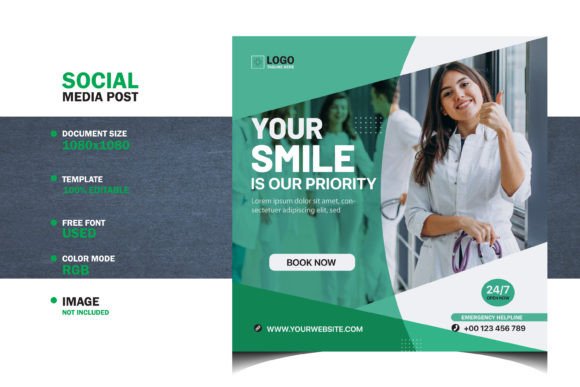
- Optimized Resolution: Social platforms have strict requirements for image quality. Templates designed at 1080×1080 pixels ensure crisp display on high-definition mobile screens, which is where most patients consume content.
- Standard DPI: While 72 DPI is the standard for web graphics, ensuring the source file is vector-based (like an EPS) means the design can be scaled up for print materials like brochures or waiting room posters without losing quality.
- Typography Flexibility: Using free fonts is a significant advantage. It eliminates licensing costs and ensures that anyone on the team can open the file and make edits without needing to purchase expensive typefaces.
It is important to note that while these templates provide the structural framework, they often do not include specific photography. This is actually a benefit, as it allows organizations to use authentic images of their own staff and facilities, which resonates more deeply with local audiences than generic stock photography.
Practical Applications Across Healthcare Sectors
The versatility of a Health Care Social Media Post template means it can be adapted for a wide array of scenarios. Understanding where and how to deploy these designs maximizes their return on investment.
- Preventive Care Campaigns: During flu season or National Heart Month, clinics can rapidly produce a series of educational posts. The template provides the layout, while the content team fills in the specific statistics and advice.
- Service Announcements: When a practice introduces a new service, such as telehealth appointments or a new specialist, a polished graphic grabs attention more effectively than a plain text update.
- Staff Spotlights: Humanizing the brand is key. Templates can be adjusted to feature photos of doctors and nurses, adding a personal touch that builds patient comfort.
- Event Promotion: Health fairs, vaccination drives, and webinar invitations require clear, bold visuals to drive attendance. A structured design ensures all critical details (date, time, location) are prominent.
For small business owners and independent practitioners, the ability to download a single EPS file and customize it repeatedly saves significant budget. Instead of hiring a designer for every single post, they can maintain an in-house workflow that remains professional and compliant with branding standards.
Navigating Limitations and Best Practices
While templates offer immense value, users must approach them with a strategic mindset. A common limitation is the temptation to over-customize to the point of clutter. The strength of a good Health Care Social Media Post lies in its simplicity and readability. Users should resist the urge to cram too much text into the designated areas. Remember, the goal is to stop the scroll, not to write a medical journal article in a caption.
Additionally, accessibility should always be a consideration. When editing colors, ensure there is sufficient contrast between the text and the background for users with visual impairments. Since many templates use free fonts, verify that the chosen typeface is legible at small sizes on mobile devices.
Another practical expectation involves file formats. If you are not proficient in Adobe Illustrator, working directly with an EPS file might seem daunting. In such cases, the included JPG file serves as a excellent reference or can be used in simpler drag-and-drop editors if the layers are not required. However, for true customization, learning the basics of vector editing or collaborating with someone who has these skills is recommended to unlock the full potential of the editable elements.
Evaluating Suitability for Your Projects
Before integrating a new design resource into your workflow, consider your specific needs. Are you looking for a one-off solution for a specific campaign, or do you need a sustainable system for year-round content? A robust template package usually includes support options. For instance, if the creator offers assistance via their profile, this adds a layer of security for users who might encounter technical hurdles during customization.
Feedback mechanisms, such as rating the item after use, also contribute to the ecosystem. They help creators improve their products and guide future buyers toward the most effective tools. Engaging with the community of creators and users ensures that the resources available remain high-quality and relevant to current design trends.
In conclusion, the Health Care Social Media Post is more than just a graphic; it is a communication strategy encapsulated in a visual format. By leveraging customizable, high-resolution templates, healthcare professionals can focus on what they do best—caring for patients—while ensuring their digital presence is informative, engaging, and visually stunning. Whether utilized by a large hospital network or a solo practitioner, these tools democratize high-quality design, allowing the message of health and wellness to reach further than ever before.