Strategic Branding with the Butterfly Simple Mascot Logo
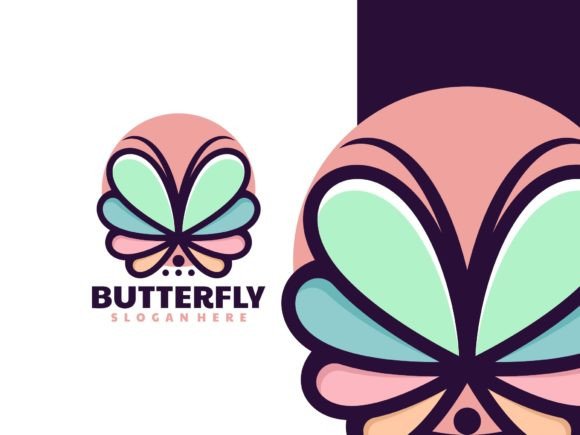
In the crowded marketplace of modern business, visual identity is often the first point of contact between a brand and its audience. A well-chosen symbol does more than decorate a website; it communicates values, establishes trust, and anchors memory. The Butterfly Simple Mascot Logo represents a strategic asset for entrepreneurs, marketers, and creators who understand that clarity drives conversion. Unlike complex illustrations that lose detail on smaller screens or cluttered designs that confuse the viewer, this specific mascot leverages the universal symbolism of transformation and lightness while maintaining a clean, scalable structure.
Adopting this logo is not merely an aesthetic choice but a decision rooted in long-term branding goals. The butterfly archetype suggests growth, evolution, and agility—qualities highly desirable for startups, educational platforms, wellness coaches, and creative agencies. However, the true value lies in the execution. A generic clip-art butterfly can dilute a brand's perceived professionalism. In contrast, a vector-based, simple mascot design offers the versatility required for serious commercial application. It allows decision-makers to deploy a consistent visual language across diverse touchpoints, from mobile app icons to large-format signage, without compromising quality.
The Strategic Advantage of Vector Scalability
When evaluating digital assets, the technical foundation is as critical as the visual appeal. The Butterfly Simple Mascot Logo is built on a vector framework, a detail that significantly impacts operational efficiency and brand consistency. Raster images (like standard JPEGs) are composed of pixels; when enlarged, they become blurry and unprofessional. Vectors, however, use mathematical paths to define shapes. This means the logo remains crisp whether it is displayed on a smartwatch screen or a highway billboard.
For professionals managing multiple channels, this scalability eliminates the need to maintain dozens of file variations for different resolutions. You gain a single source of truth for your branding. The included file formats—AI, CDR, EPS, PDF, PNG, and PSD—ensure compatibility with virtually any design workflow. Whether your internal team uses Adobe Illustrator, CorelDRAW, or Photoshop, or if you outsource to freelance designers, the asset integrates seamlessly. This flexibility reduces friction in production timelines and ensures that marketing materials always meet high-quality standards.
Furthermore, the editable nature of these 100 vector files empowers you to adapt the logo as your business evolves. You might start with a specific color palette that reflects a launch phase, then shift to a monochrome version for corporate documentation later. Because the lines and curves are fully adjustable, you can modify the wing span, simplify the antennae, or integrate the mascot into a wordmark without losing the integrity of the design. This adaptability supports agile branding strategies where quick pivots are often necessary.
Aligning Visual Identity with Business Goals
Integrating the Butterfly Simple Mascot Logo into your brand architecture should be a deliberate process aligned with your core objectives. Before implementation, consider what the butterfly signifies in your specific context. For a life coach or therapist, it reinforces the narrative of personal transformation. For a logistics company, it might symbolize speed and global reach. For an educational tech startup, it represents the unfolding of knowledge. By defining this narrative early, you ensure that every instance of the logo reinforces your strategic message rather than serving as mere decoration.
Thoughtful deployment also involves understanding your audience's perception. Adults aged 20 to 50, who make up the bulk of today's consumer base, tend to favor authenticity and minimalism. Overly ornate or childish mascots can sometimes undermine credibility in B2B sectors or premium service industries. The "simple" aspect of this mascot is its strongest selling point; it strikes a balance between approachability and sophistication. It invites engagement without appearing frivolous.
To maximize impact, map out where this logo will appear in the customer journey. Will it be the favicon in the browser tab? The watermark on video content? The embossed seal on packaging? Planning these touchpoints ensures a cohesive experience. Consistency builds recognition, and recognition fosters trust. When a potential client sees the same clear, high-quality symbol across your social media, website, and email signature, it signals stability and attention to detail—traits that influence purchasing decisions.
Practical Implementation and Customization
Once you have acquired the asset, the next step is customization to ensure it feels unique to your entity. While the base design is robust, making it your own prevents it from looking like a stock template. The package includes a documentation folder with font links, allowing you to pair the mascot with typography that matches your brand voice. Since fonts are not included directly due to licensing restrictions, you are guided to obtain free, high-quality typefaces from reputable sources. This step is crucial: the right font can shift the tone from playful to authoritative or from modern to classic.
Here is a practical approach to customizing the Butterfly Simple Mascot Logo:
- Color Psychology: Do not default to the preview colors. Analyze your industry standards. If competitors all use blue, consider a warm orange or a deep purple to stand out, provided it aligns with your emotional positioning.
- Contextual Testing: Place the logo on various backgrounds before finalizing. Ensure it holds up against dark modes, textured images, and solid whites. The vector format allows you to easily create inverse versions for different contexts.
- Animation Potential: Given the simple lines of the mascot, it is an excellent candidate for subtle motion graphics. A gentle flutter of the wings in a website header or a loading animation can increase user engagement without being distracting.
- Merchandise Readiness: Test the design on physical mockups. Will the details hold up on an embroidered polo shirt or a stamped notebook? The high-resolution EPS and PDF files are specifically designed to handle these print requirements.
Remember that the goal is not just to have a logo, but to have a functional brand tool. The inclusion of PSD layers allows for shadowing and texture effects if your campaign requires a more three-dimensional look, while the AI and EPS files keep the core geometry clean for vector printing. This duality supports both digital-first campaigns and traditional print marketing.
Risks of Unintentional Branding
While the Butterfly Simple Mascot Logo offers significant advantages, relying on it without a clear strategy carries risks. The primary danger is generic usage. If you simply drop the logo onto a website without considering spacing, color harmony, or accompanying messaging, it may fail to resonate. A logo cannot fix a weak value proposition; it can only amplify a strong one. Using a transformation symbol for a static, unchanging product might create cognitive dissonance for the viewer.
Additionally, neglecting the technical aspects can lead to brand degradation. Even with vector files, improper export settings can result in pixelated PNGs or missing fonts in PDFs. It is essential to designate a team member responsible for brand asset management. They should understand how to extract the correct file format for each use case. For instance, using a PNG with a white background on a colored section of a website looks amateurish. The transparent background capabilities of the provided PNGs must be utilized correctly.
There is also the risk of over-saturation if the design is too popular. To mitigate this, focus on unique customization. Change the gradient, adjust the line weight, or combine the mascot with a distinct pattern or icon set that is exclusive to your brand. The logo should be the anchor, not the entire ship. Surround it with proprietary photography, custom copy, and a unique user interface to create a holistic brand experience that cannot be replicated by simply buying the same stock vector.
Long-Term Value and Decision Making
Investing in high-quality, editable assets like the Butterfly Simple Mascot Logo is a decision that pays dividends over time. Cheap, non-editable logos often require a full rebrand within a year or two as a business outgrows its initial limitations. By starting with a scalable, professional foundation, you future-proof your visual identity. You avoid the costs and confusion associated with migrating to a new logo when you expand into new markets or launch new product lines.
Moreover, the ease of use associated with these files boosts productivity. Marketing teams spend less time troubleshooting broken images or recreating logos for different formats and more time on strategy and content creation. For freelancers and agencies, delivering a client a comprehensive package including AI, CDR, and EPS files demonstrates professionalism and adds tangible value to your service offering.
Ultimately, the effectiveness of the Butterfly Simple Mascot Logo depends on the intentionality behind its use. Treat it as a strategic component of your business plan. Define your goals, understand your audience, customize the asset to reflect your unique position, and maintain rigorous quality control. When approached with this level of thoughtfulness, a simple vector image becomes a powerful engine for brand recognition, customer loyalty, and sustained growth. The butterfly does not just represent change; in your hands, it can drive it.